In recent years, the healthcare industry has witnessed a transformative shift towards adopting innovative technologies to improve patient outcomes, streamline operations, and enhance overall efficiency. Among these emerging technologies, generative AI solutions have emerged as powerful tools with the potential to revolutionize healthcare delivery. From diagnosis to treatment and drug discovery, enterprise generative AI solutions are paving the way for more accurate, efficient, and personalized healthcare solutions. In this article, we will explore the various use cases of generative AI solution for healthcare, highlighting their benefits and potential impact on the industry.
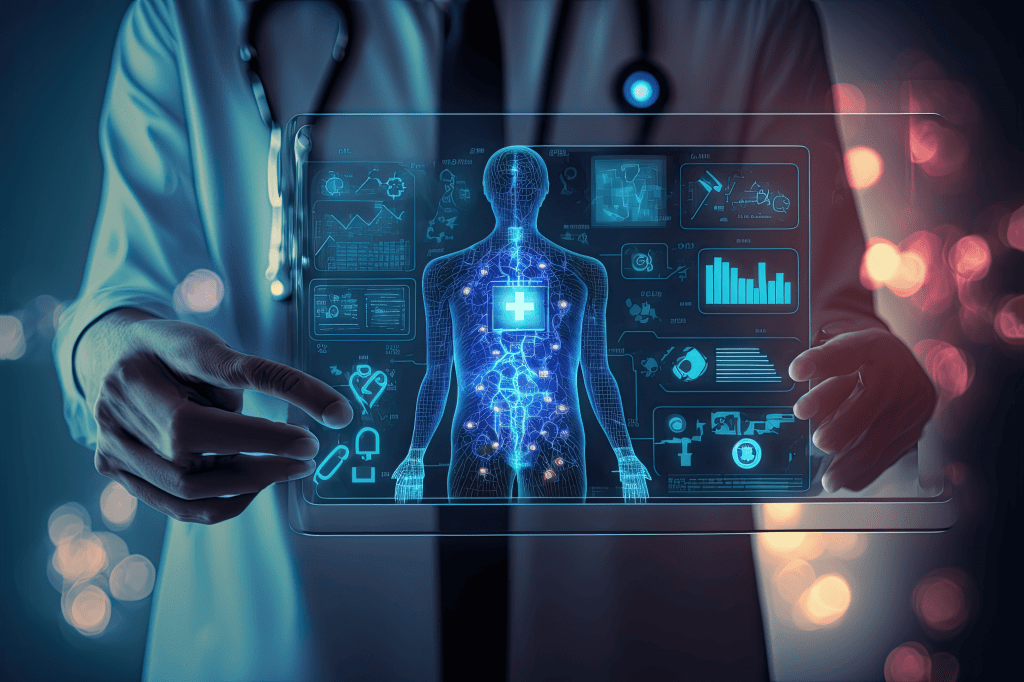
Understanding Generative AI Solution for Healthcare
What is Generative AI?
Generative AI refers to advanced machine learning algorithms capable of generating new content, such as images, text, and even entire datasets, based on the patterns and information present in the training data. In healthcare, generative AI solution for healthcare leverage patient data, medical imaging, and clinical research to generate insights, predictions, and recommendations that aid in diagnosis, treatment planning, and medical research.
Importance of Generative AI in Healthcare
Generative AI holds immense promise in healthcare for its ability to analyze complex medical data, identify patterns, and generate actionable insights that can improve patient outcomes and drive medical innovation. By harnessing the power of generative AI, healthcare providers can unlock new possibilities in diagnosis, treatment, and disease prevention, ultimately leading to better patient care and outcomes.
Key Use Cases of Generative AI Solutions in Healthcare
Medical Image Analysis
Medical imaging plays a crucial role in diagnosis and treatment across various medical specialties. Generative AI solutions enhance medical image analysis by accurately interpreting and analyzing images, enabling early detection of diseases and abnormalities.
Image Segmentation and Classification
Generative AI algorithms can segment medical images and classify different structures and tissues with high accuracy, aiding radiologists and clinicians in diagnosing conditions such as tumors, fractures, and organ abnormalities.
Image Enhancement and Reconstruction
Generative AI techniques improve the quality of medical images by reducing noise, enhancing contrast, and reconstructing images from limited data, leading to clearer and more detailed images for diagnosis and surgical planning.
Disease Diagnosis and Prediction
Generative AI solutions leverage patient data, medical records, and diagnostic tests to aid in disease diagnosis and prediction, enabling early intervention and personalized treatment strategies.
Predictive Analytics for Disease Risk Assessment
By analyzing patient data and medical histories, generative AI can predict the risk of developing certain diseases, such as cardiovascular disorders, diabetes, and cancer, allowing healthcare providers to implement preventive measures and lifestyle interventions.
Differential Diagnosis Support
Generative AI algorithms assist healthcare professionals in differential diagnosis by analyzing symptoms, medical history, and diagnostic tests to generate a list of potential conditions, helping clinicians make informed decisions and rule out unlikely diagnoses.
Drug Discovery and Development
Generative AI accelerates the drug discovery and development process by generating novel molecular structures, predicting drug-target interactions, and optimizing drug candidates for efficacy and safety.
Virtual Screening and Lead Optimization
Generative AI platforms screen vast chemical libraries to identify potential drug candidates with desired properties, such as potency, selectivity, and bioavailability. Additionally, these platforms optimize lead compounds through molecular design and structure-activity relationship analysis, expediting the drug development pipeline.
De Novo Drug Design
Generative AI algorithms design novel molecular structures with therapeutic potential by generating chemical compounds with specific pharmacological properties, target affinity, and safety profiles, offering new avenues for drug discovery and personalized medicine.
Personalized Treatment Planning
Generative AI facilitates personalized treatment planning by analyzing patient data, genetic information, and clinical outcomes to tailor therapies to individual patients’ needs and characteristics.
Pharmacogenomics and Precision Medicine
Generative AI platforms analyze genetic data and biomarkers to predict patients’ responses to medications, optimize drug dosages, and identify personalized treatment strategies based on genetic predispositions and pharmacological profiles.
Treatment Recommendation Systems
By integrating patient data, medical guidelines, and clinical evidence, generative AI algorithms generate personalized treatment recommendations for various medical conditions, helping clinicians choose the most effective and least invasive interventions for their patients.
Medical Literature Summarization and Knowledge Discovery
Generative AI solutions extract insights from vast amounts of medical literature, clinical trials, and research articles, enabling healthcare professionals to stay updated on the latest advancements and discoveries in their field.
Automated Literature Review and Evidence Synthesis
Generative AI algorithms summarize and synthesize information from diverse sources, providing concise summaries, key findings, and evidence-based recommendations to support clinical decision-making, research, and evidence-based practice.
Knowledge Graph Construction and Semantic Understanding
Generative AI techniques construct knowledge graphs and semantic representations of medical concepts, relationships, and entities, facilitating data integration, semantic search, and knowledge discovery in healthcare domains such as disease biology, treatment pathways, and drug interactions.
Virtual Patient Modeling and Simulation
Generative AI enables the creation of virtual patient models and simulations that mimic real-world physiological processes, disease progression, and treatment outcomes, offering valuable insights for medical research, education, and clinical practice.
Physiological Modeling and Simulation
Generative AI platforms model physiological systems, organ functions, and disease mechanisms, simulating complex physiological processes, such as cardiovascular dynamics, neural signaling, and immune responses, to study disease pathophysiology and therapeutic interventions.
Surgical Simulation and Medical Training
Generative AI techniques generate realistic surgical simulations and virtual patient scenarios for medical training, allowing surgeons and healthcare professionals to practice surgical procedures, refine surgical techniques, and improve patient safety in a virtual environment.
Conclusion
Generative AI solutions hold immense promise in healthcare for their ability to analyze complex medical data, generate insights, and facilitate personalized and efficient patient care. From medical image analysis to drug discovery and treatment planning, generative AI is revolutionizing various aspects of healthcare delivery, ultimately leading to better patient outcomes and driving medical innovation. By harnessing the power of generative AI, healthcare providers can unlock new possibilities in diagnosis, treatment, and disease prevention, ultimately leading to a more efficient, accurate, and personalized healthcare system.
In conclusion, the use cases of enterprise generative AI solutions in healthcare are vast and diverse, offering numerous benefits for patients, healthcare providers, and the industry as a whole. As technology continues to advance, the potential for generative AI to transform healthcare delivery and improve patient care is limitless, making it an essential tool for the future of healthcare.


Leave a Reply