Introduction
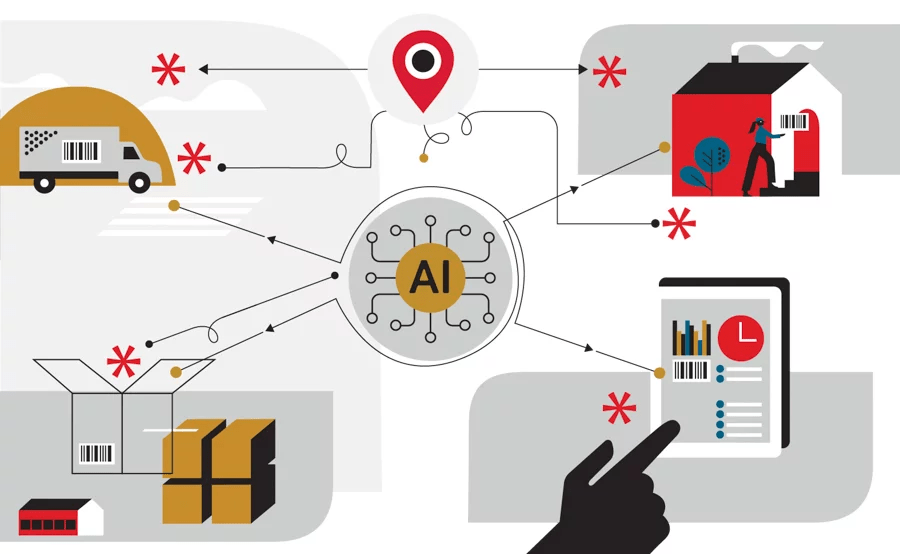
In the fast-paced world of logistics, efficiency, accuracy, and adaptability are paramount. With the exponential growth of e-commerce and global trade, the demands placed on logistics networks have never been greater. Fortunately, technological advancements, particularly in artificial intelligence (AI), are transforming the landscape of logistics operations. One such innovation is Generative AI platforms, which hold the promise of revolutionizing the way logistics companies manage their supply chains, optimize routes, forecast demand, and mitigate risks. In this article, we delve into the transformative potential of Generative AI platform for logistics industry.
Understanding Generative AI
Before diving into its application in logistics, it’s essential to grasp the concept of Generative AI. Generative AI refers to a class of AI algorithms capable of generating new data instances that resemble a given dataset. These algorithms learn the underlying patterns and structures of the data they are trained on and can then create new data points that exhibit similar characteristics. This ability to generate synthetic data opens up a plethora of possibilities across various domains, including logistics.
The Role of Generative AI in Logistics
Demand Forecasting
One of the key challenges in logistics is accurately forecasting demand. Traditional methods often rely on historical data and statistical models, which may not capture sudden shifts or emerging trends. Generative AI platform for logistics, however, can analyze vast amounts of data, including historical sales data, market trends, weather patterns, and social media sentiment, to generate more accurate demand forecasts. By identifying subtle patterns and correlations in the data, these platforms enable logistics companies to optimize inventory management, reduce stockouts, and improve customer satisfaction.
Route Optimization
Efficient route planning is another critical aspect of logistics operations. Whether it’s delivering packages to customers or transporting goods between warehouses, optimizing routes can significantly reduce fuel consumption, transportation costs, and delivery times. Generative AI platform for logistics leverages advanced algorithms, such as genetic algorithms and reinforcement learning, to dynamically optimize routes based on factors like traffic conditions, vehicle capacity, delivery windows, and fuel efficiency. By continuously learning and adapting to changing conditions, these platforms help logistics companies streamline their operations and enhance overall efficiency.
Supply Chain Management
Managing a complex supply chain involves coordinating multiple suppliers, manufacturers, distributors, and retailers across various locations. Any disruptions or delays in the supply chain can have cascading effects, leading to inventory shortages, production bottlenecks, and lost revenue. Generative AI platform for logistics offers real-time visibility into the entire supply chain, allowing companies to identify potential risks and proactively address them. By analyzing data from disparate sources, such as IoT sensors, RFID tags, and blockchain networks, these platforms can detect anomalies, predict supply chain disruptions, and recommend alternative courses of action to mitigate risks.
Inventory Optimization
Maintaining optimal inventory levels is crucial for balancing supply and demand while minimizing carrying costs and stockouts. Generative AI platforms can analyze historical sales data, seasonal trends, market demand forecasts, and supplier lead times to optimize inventory levels across multiple locations. By generating probabilistic models and simulating different scenarios, these platforms help logistics companies determine the optimal reorder points, safety stock levels, and replenishment schedules. This proactive approach to inventory management ensures that companies have the right products in the right quantities at the right time, thereby improving customer satisfaction and reducing excess inventory costs.
Risk Management
Logistics operations are inherently susceptible to various risks, including natural disasters, geopolitical events, labor strikes, and supplier bankruptcies. Generative AI platforms enable logistics companies to assess and mitigate these risks by analyzing historical data, identifying potential vulnerabilities, and simulating different risk scenarios. By generating probabilistic models and conducting Monte Carlo simulations, these platforms quantify the likelihood and impact of various risk events, allowing companies to develop contingency plans and allocate resources more effectively. This proactive approach to risk management enhances the resilience and agility of logistics networks, enabling them to withstand unforeseen disruptions and maintain continuity of operations.
Case Studies
Case Study 1: Amazon
As one of the world’s largest e-commerce companies, Amazon relies heavily on advanced logistics technologies to fulfill millions of orders every day. The company employs Generative AI platforms to optimize its delivery routes, forecast demand for products, and manage its vast network of warehouses and fulfillment centers. By leveraging machine learning algorithms and real-time data analytics, Amazon can deliver packages faster, reduce shipping costs, and improve overall customer satisfaction.
Case Study 2: Maersk Line
Maersk Line, the world’s largest container shipping company, faces numerous challenges in managing its global fleet of vessels and optimizing its maritime logistics operations. To address these challenges, Maersk utilizes Generative AI platforms to analyze shipping routes, predict vessel performance, and optimize fuel consumption. By harnessing the power of AI-driven analytics, Maersk can optimize its vessel schedules, minimize transit times, and reduce emissions, thus enhancing sustainability and profitability.
Future Outlook
As Generative AI continues to evolve and mature, its impact on the logistics industry is expected to grow exponentially. With advances in deep learning, reinforcement learning, and multi-agent systems, Generative AI platforms will become even more sophisticated, enabling logistics companies to achieve unprecedented levels of efficiency, agility, and resilience. From autonomous drones and delivery robots to self-driving trucks and predictive maintenance systems, the possibilities are limitless. By embracing Generative AI, logistics companies can stay ahead of the curve and capitalize on the transformative power of AI-driven innovation.
Conclusion
In conclusion, Generative AI platforms have the potential to revolutionize the logistics industry by optimizing routes, forecasting demand, managing supply chains, and mitigating risks. By leveraging advanced algorithms and real-time data analytics, logistics companies can streamline their operations, reduce costs, and enhance customer satisfaction. While there are still challenges to overcome, such as data privacy concerns and regulatory compliance, the benefits of Generative AI far outweigh the risks. As we embark on this journey of digital transformation, one thing is clear: the future of logistics is powered by Generative AI.


Leave a Reply